
Call our team
01484 442420Find An Applicator
Menu
close
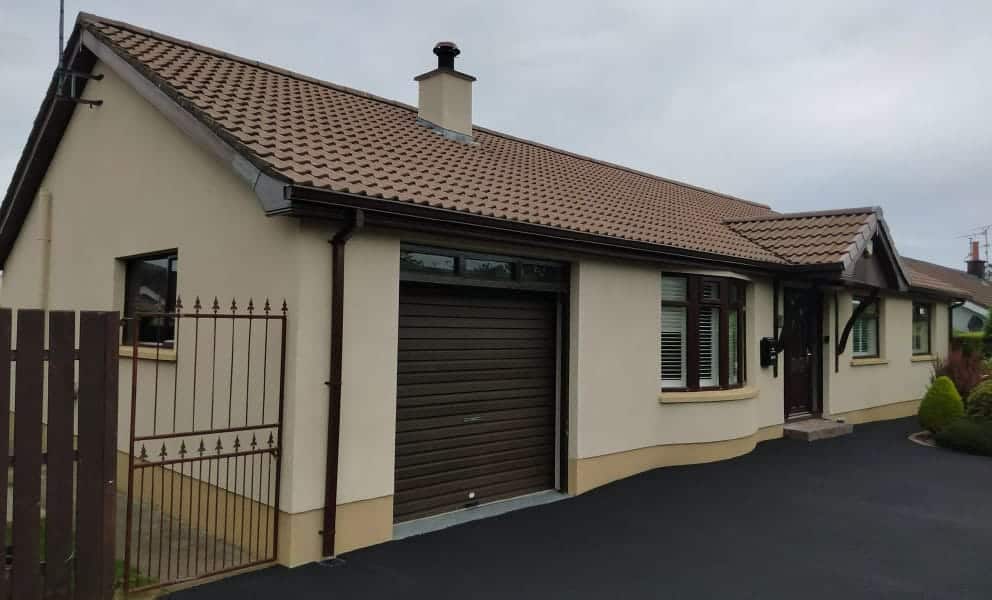
Photo credit: JLP Contracts
Read on as we take a closer look, including six benefits you’ll enjoy…
To set the scene, it’s worth highlighting the difference between this kind of insulation and its alternatives. The pivotal words are breathable and external.
It goes without saying that external means it’s applied to the outside of a building. As for breathable, this refers to its ability to let moisture pass through. That might seem trivial, but it’s actually vital for buildings with permeable walls.
A common feature on older buildings, permeable walls are designed to let moisture through as a form of ventilation. If non-breathable insulation is applied to them, it will trap moisture in the walls and the building.
“Isn’t all external wall insulation breathable then?” – you might wonder. Unfortunately not. Some of the most common types of insulation are non-breathable, such as boards made from polystyrene or foam. As a result, many people unintentionally cause problems when trying to improve their home’s heat retention.
Now onto the benefits of breathable external wall insulation…
First is ventilation, as touched upon above. From cooking, showering and laundry to talking and breathing, there are a long list of domestic activities that release moisture. If insulation is non-breathable, it will trap that moisture inside. That leads to condensation on walls, windows and elsewhere.
Breathable insulation allows moisture to escape from inside your home to keep humidity at a reasonable level.
Condensation isn’t just an annoyance that you have to wipe away from misty windows and wet walls. It can make parts of your home damp, which provides the perfect environment for mould to grow.
By letting moisture out, breathable external wall insulation reduces the risk of damp and mould on your walls and ceilings. For one, that means no eyesores ruining the look inside your home. It also allows you to avoid structural issues with timber and masonry.
SprayCork provides an added benefit of being weather-resistant as well as breathable. When applied externally, it will protect your walls from the elements, which minimises the risk of penetrating damp as well as damp from condensation (as above).
Did you know that damp and mould can cause health issues? According to the NHS, it increases the risk of respiratory problems, worsens existing disorders, and can even affect the immune system.
That’s because mould releases spores into the air, which can easily be inhaled by anyone exposed to them. Babies, children, old people and anyone with pre-existing conditions is particularly at risk. But it can also cause new issues to develop, such as asthma.
Ensuring your insulation is breathable will let moisture out, minimising the risk of condensation and damp. That adds a second meaning to the name ‘breathable insulation’, ensuring you can breathe easy inside your home.
If you’re still suffering from damp inside the home, a damp-resistant internal coating can prevent moisture from settling on your walls and ceiling.
Let’s not forget the big one – thermal insulation. When non-breathable insulation is used on permeable walls, moisture will typically pass through to the insulation itself. In many cases, that renders the insulation less effective, so it no longer stops heat passing through.
In contrast, using a suitable type of insulation will ensure that it stays at the top of its game. That means effective insulation, a more comfortable temperature, and lower energy bills in the long run. As a prime example, our breathable external wall coating can reduce your heat loss by 30%, which reduces the reliance of costly heating systems.
It’s worth noting that breathable external wall insulation isn’t just suitable for permeable walls. It can also be used on impermeable walls without any drawbacks. That makes it ideal for buildings with both permeable and impermeable walls. If you have an old building with a modern extension, for example, you don’t need to use two separate types of insulation.
At this point, you may be wondering what the point of non-breathable insulation is, if its breathable counterpart works for both. In short, it’s simply a matter of advances in building materials. Breathable external wall insulation is a superior alternative, but some people still cut corners with non-breathable materials.
Finally, there’s the benefit of installing insulation externally. Doing so means there’s no impact on the inside of your home. For one, you won’t need to decorate. You can also sidestep any chance of insulation eating away at the space inside a building.
That said, you will have to consider which form of insulation you use externally if you really want to minimise the impact on your property. Even many types of breathable insulation can still pose problems because of their size.
As an example, standard 100mm insulation boards (along with a top-coat of render) may require exterior fixtures to be adjusted. This includes windows, doorframes, guttering and drainpipes. That can make the insulation job more time-consuming and expensive.
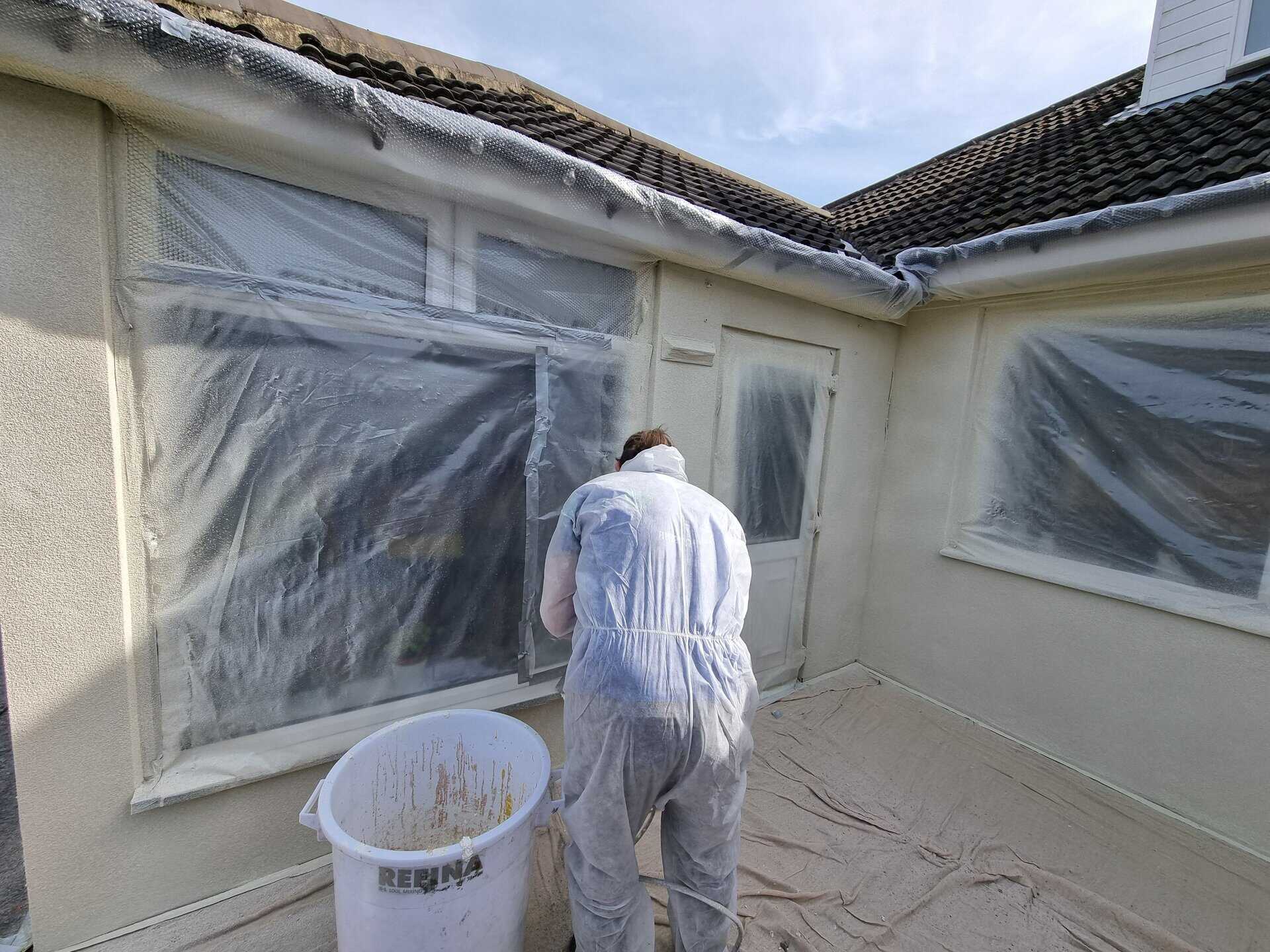
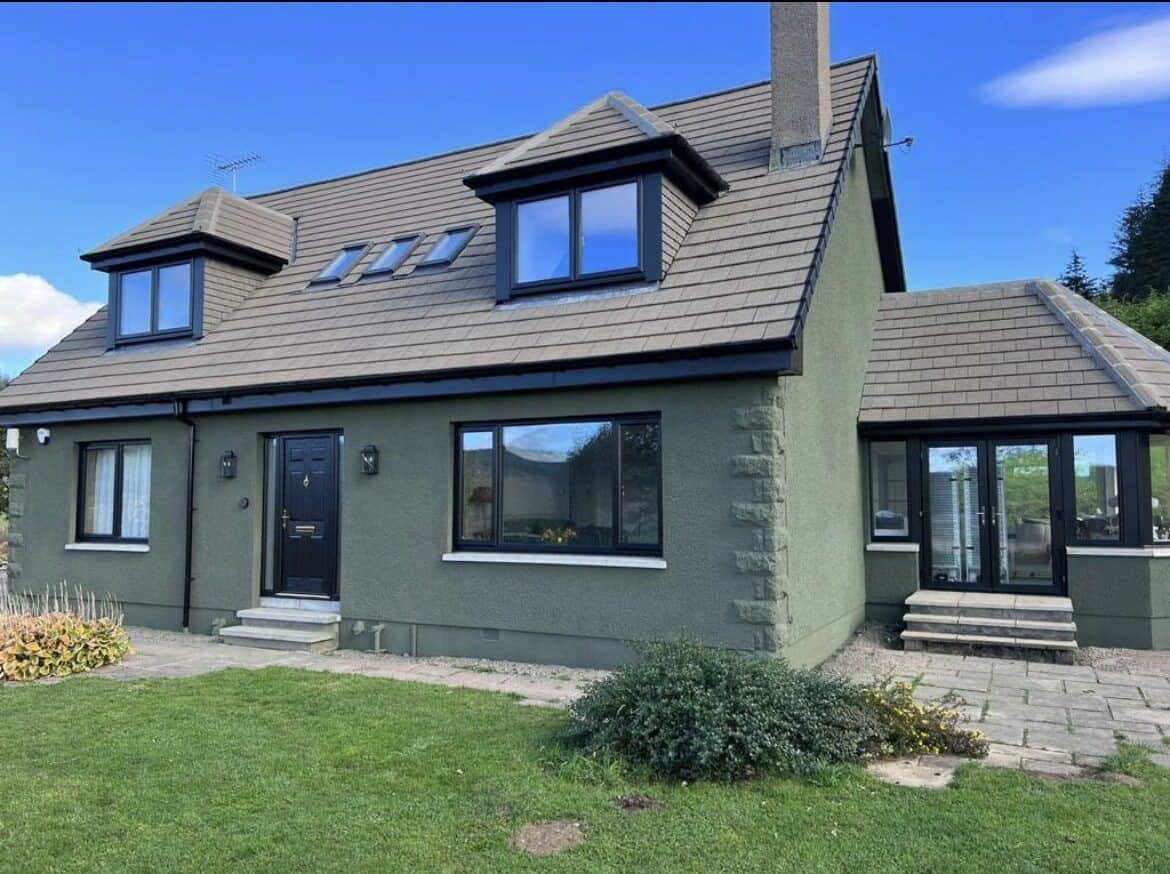
For truly minimal impact, use a sprayed insulative coating like SprayCork. It’s applied as a render, meaning there’s no need to adjust fixtures on your walls to accommodate it. It also comes with a choice of 28 colours, so you can hand-pick the right look for your home.
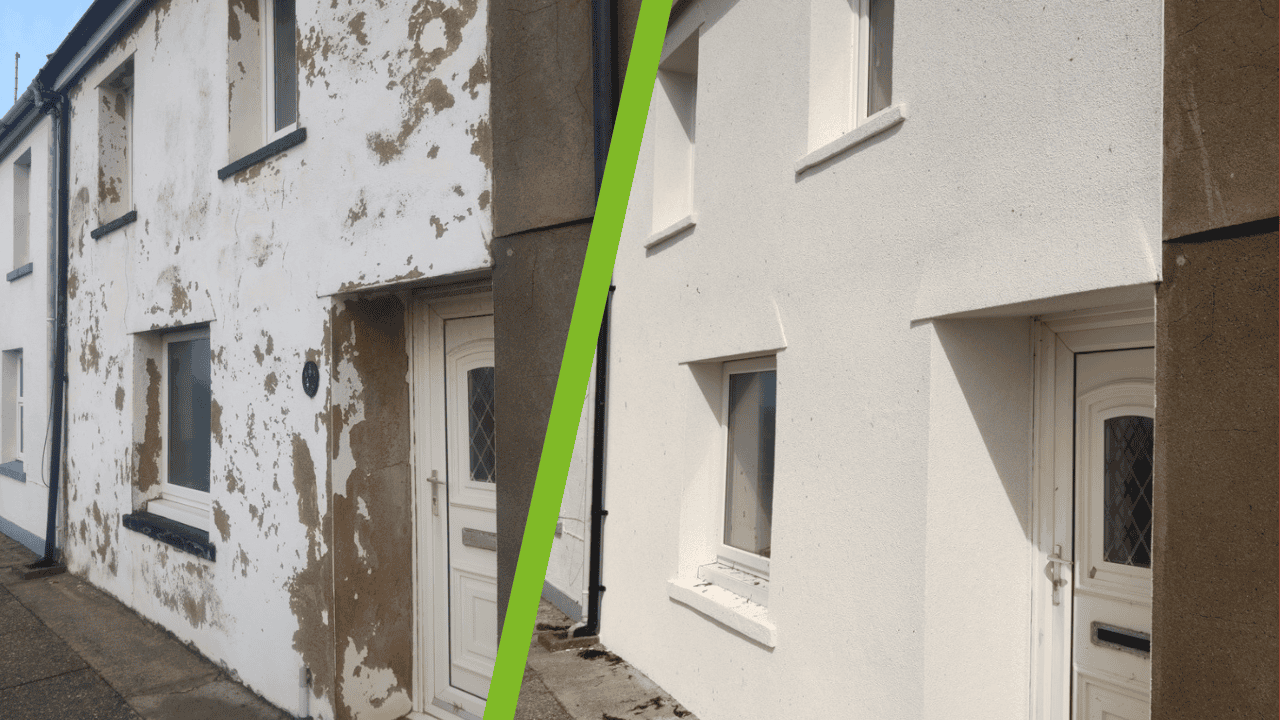
CorkSol’s external wall insulation is the ideal fit if you’re looking for breathability and thermal performance. It provides a uniform finish with a choice of colours, so you can reap all of the rewards above as well as refreshing your building’s appearance.
Alternatively, opt for our internal wall insulation, which eliminates any concerns about space with a coating that’s just 8mm thick. Similarly, it’s breathable, highly insulative and even damp-resistant. Any questions? Feel free to contact us on 01484 442420 or email [email protected].
"*" indicates required fields