
Call our team
01484 442420Find An Applicator
Menu
close
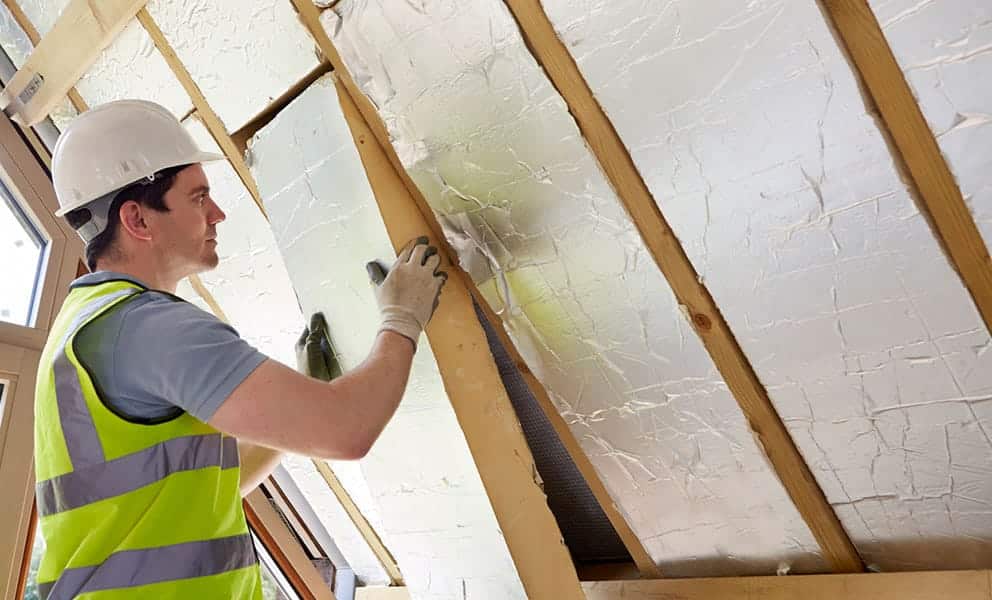
Retrofitting social housing is a way to make existing stock more energy efficient. But not everyone is clear on why it’s necessary or how to go about it. In this guide, we’ll dig a little deeper into social housing retrofit, including the benefits and some barriers for housing associations.
Broadly speaking, retrofitting is the process of adding something after manufacture or construction. So, you can retrofit an older car with parking sensors, for example. Over time, it’s taken on an eco-friendly slant. Using the same example of a car, the most common meaning of retrofit is installing an electric motor and battery on a petrol or diesel vehicle.
That brings us onto social housing, where retrofitting is the process of upgrading the energy efficiency of existing buildings.
By now, most people are aware of what’s possible when you build a new house with energy efficiency in mind. The pinnacle of this is the Passivhaus – an ultra-low-energy building standard, where homes require very little energy to heat or cool the space.
Of course, councils and housing associations don’t have an unlimited budget to build new homes. Nor do they have unlimited space in which to build them. So, it’s in their interest to retrofit existing social housing stock to improve its energy efficiency. It might never reach Passivhaus standards, but it’s still a massive improvement – which has a number of benefits…
First and foremost, retrofitting social housing allows local councils and housing associations to reduce their carbon footprint. With the government increasingly focused on national decarbonisation, this is one way councils can demonstrate their cooperation and secure continued funding with schemes like the Public Sector Decarbonisation Scheme.
Of course, retrofit jobs also achieve the core purpose of social housing – providing secure, affordable accommodation for people who need it. While councils might keep rent low, housing can still become unaffordable if it costs an eye-watering amount to keep warm.
If tenants can’t afford to keep their house warm, problems with damp and mould are more likely to develop. That’s because warm air holds more moisture, and moisture is drawn to cold surfaces. Keeping the air and walls warm can prevent damp and mould developing, which will keep housing stock fit for purpose.
There’s also the cost-saving benefit for councils and housing associations. However big the retrofit investment seems, it’s still a much smaller sum than it would cost to build new housing from scratch.
Despite these benefits, retrofitting hasn’t taken off quite as much as many expected. In 2021-22, just over 3,000 wall insulation jobs were completed by 33 housing associations with more than 960,000 homes, according to Inside Housing.
Why? In 2020, the National Housing Federation surveyed 73 housing associations about retrofit barriers. Their answers provide several reasons…
74% of housing associations surveyed said that a lack of funding was the main barrier to a national retrofitting programme. That’s almost three quarters of organisations agreeing that, despite the rhetoric, the government isn’t providing enough funding for this important project.
Just over half of respondents said that a lack of clarity was to blame too. 56% of housing associations said government policy was too unclear for them to plan effectively, which is clearly problematic given that retrofit projects can take years to complete.
Just under half (47%) of housing associations in the survey said that they had concerns about unproven approaches. They wouldn’t want to use a particular type of external wall insulation, for instance, only to find out that it’s unsuitable at a later date.
40% simply said that they have other organisational priorities. It’s difficult for housing associations to invest in energy efficiency while also managing things like building safety remediation.
There is a long list of retrofitting techniques for social housing, covering everything from the floor to the roof and energy to insulation…
With 47% of housing associations concerned about unproven approaches, the best types of social housing retrofit are those which are proven to improve energy efficiency.
However, it’s also important to note that a whole-house approach is advised. This ensures that different elements work together to provide the best possible results for a building’s performance. Failure to take this approach can result in some “improvements” actually causing defects.
For example, insulation without ventilation can cause condensation problems, while unsuitable cavity wall insulation can cause damp, which is very hard to undo.
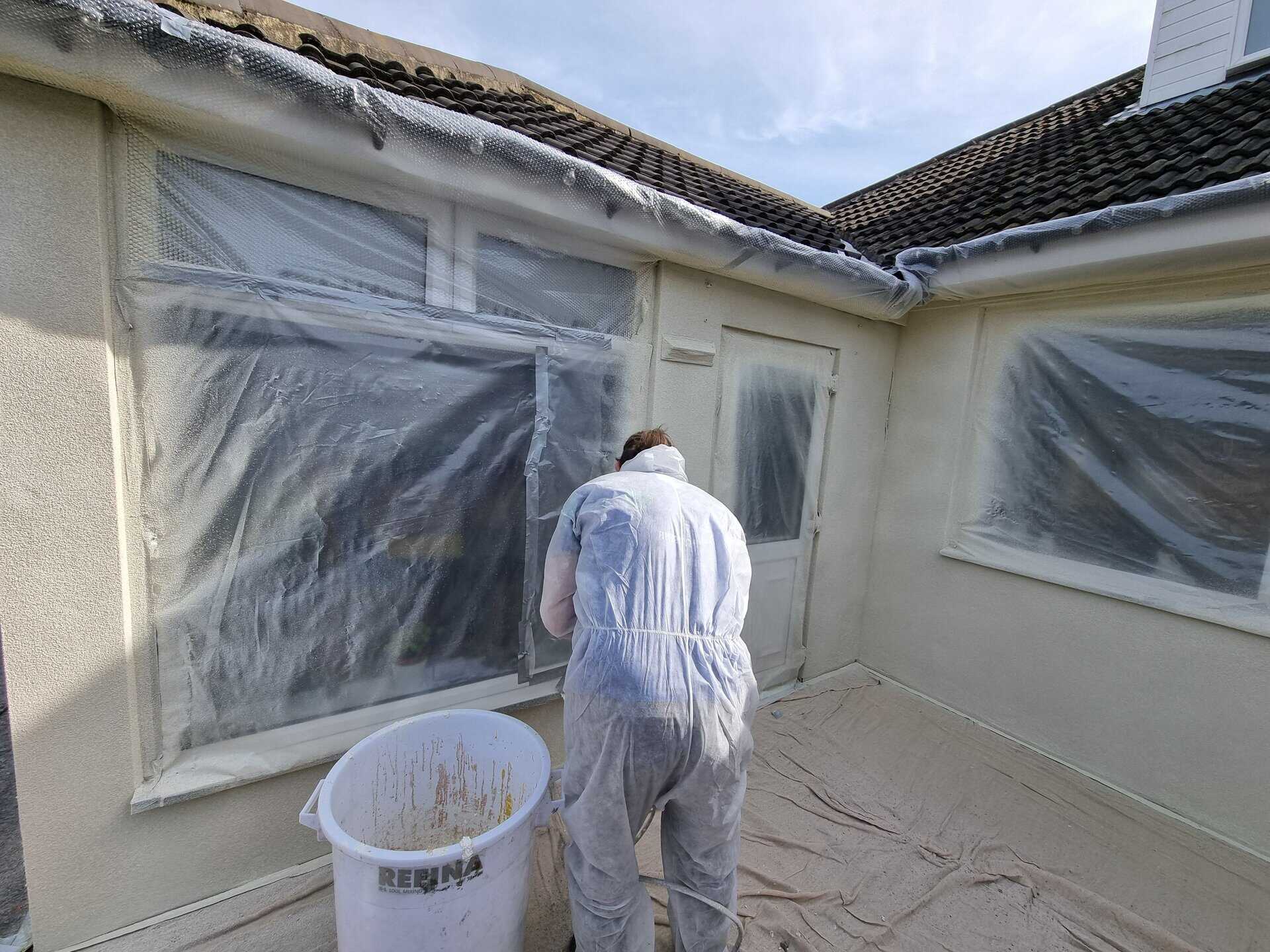
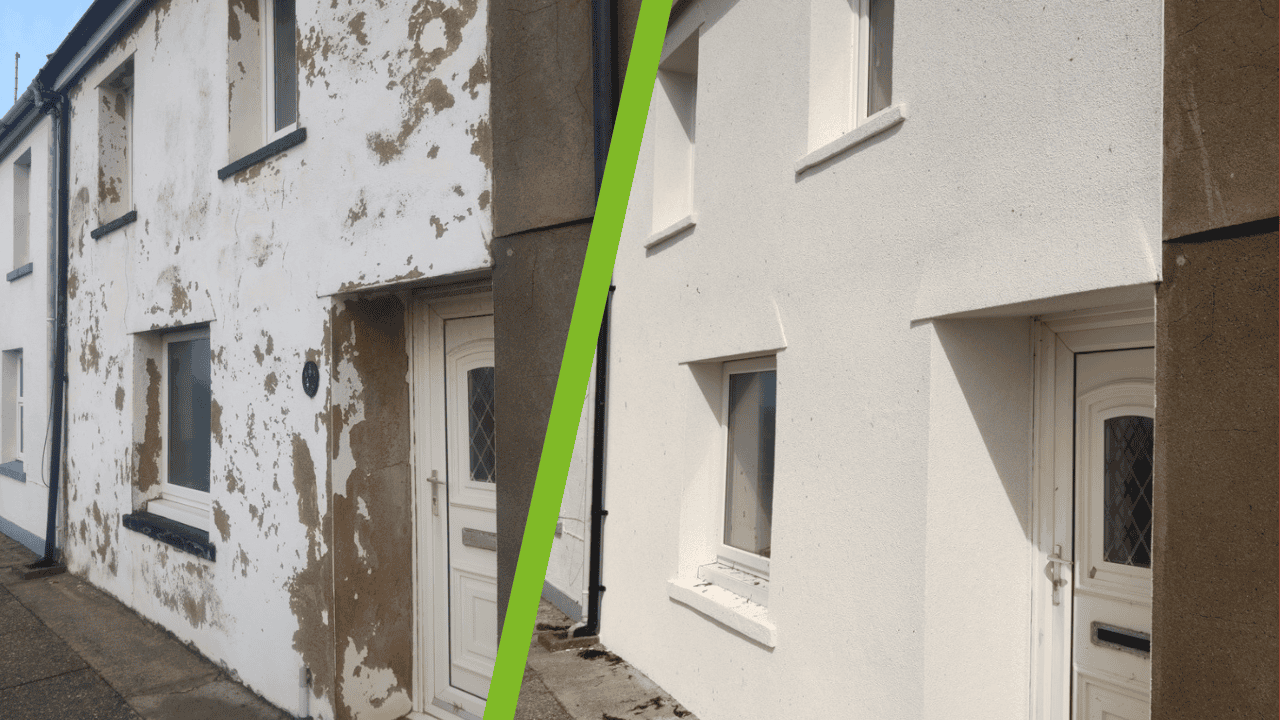
If you want to improve the energy efficiency of social housing with retrofit applications, SprayCork makes it simple. The coating can be spray-applied to internal and external walls to improve thermal efficiency – along with a range of other benefits.
It’s a safe choice based on the criteria above, as it is completely breathable to avoid any condensation problems. The surface itself is damp-resistant, so moisture can’t even settle on walls or ceilings after treatment.
It’s also a proven approach, shown to reduce heat loss by 30% when used as an internal wall coating. Best of all, there’s no impact on existing fixtures, with the final coating just 8mm thick. That means minimal disruption for social housing tenants.
At CorkSol, we have a network of approved applicators across the UK just waiting to assist with your project. Get started by calling our team on 01484 442420 or emailing [email protected].
"*" indicates required fields